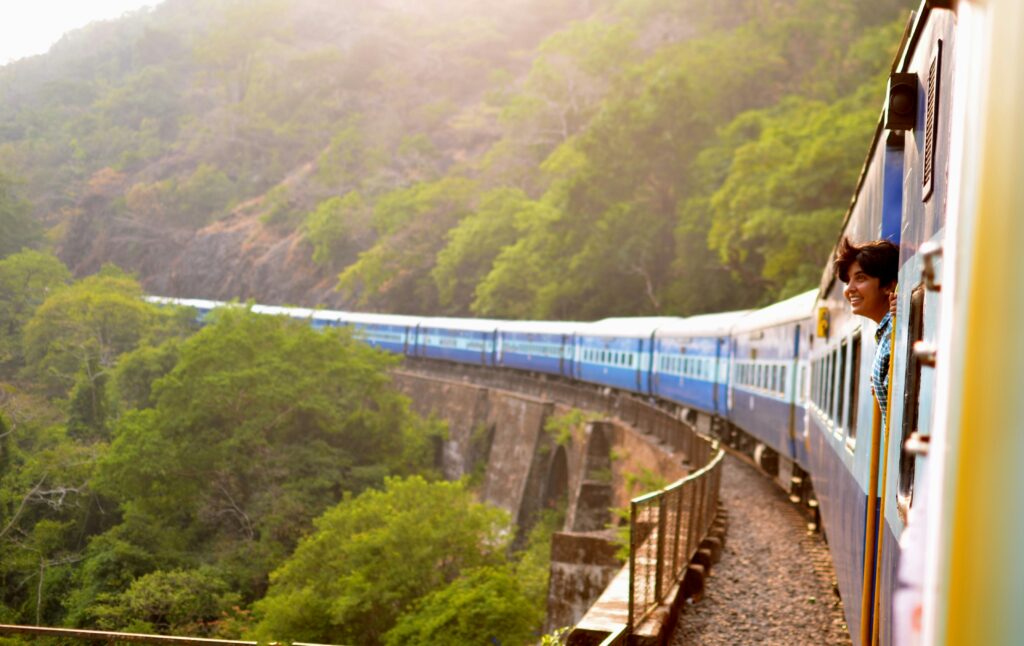
Why Take Trains in India?
Train travel is one of the most memorable ways to see India. You get changing landscapes, a glimpse of everyday life, and a very different feel from flying.
For first-time visitors, the idea of booking and riding Indian trains can feel intimidating—but it doesn’t have to be. With a bit of basic understanding, trains can be a comfortable and reliable part of your North India trip.
This guide covers which routes to consider, how to book, which classes to choose, and what to expect on board.
When Does Taking the Train Make Sense?
Trains work especially well for:
- Medium-distance routes:
- Delhi ↔ Agra
- Delhi ↔ Jaipur (on certain trains)
- Some North India overnight routes (e.g., Delhi ↔ Varanasi)
They are less ideal for:
- Very long distances when you’re short on time
- Routes with poor train connectivity or very slow timings
- Tight schedules where delays would be a big problem
Think of trains as a good option for 2–8 hour legs where you’re not in a rush and want the experience.
Common Train Classes (Simplified for First-Timers)
Train classes can look confusing at first. Here’s a simple breakdown for beginners:
Daytime / Shorter Routes
AC Chair Car (CC)
- Air-conditioned, airline-style seats
- Good for day trips like Delhi–Agra
- Reserved seating, relatively comfortable
Second Class Seating (2S)
- Non-AC or basic seating
- Cheap but less comfortable for Western travelers, can be crowded
- Fine for short hops if you’re flexible and used to local travel
For your first trip, AC Chair Car (CC) is usually the best balance for daytime routes.
Overnight / Longer Routes
Sleeper Class (SL)
- Non-AC, open berths
- Very affordable and very local
- Can be crowded, noisy, and less comfortable if you’re not used to it
AC 3-Tier (3A)
- Air-conditioned
- Open bays with 6 berths (3 on each side) + 2 side berths
- Popular choice: decent comfort, good balance of cost and privacy
AC 2-Tier (2A)
- Air-conditioned
- Open bays with 4 berths + 2 side berths
- Fewer people per bay, more space and comfort than 3A
AC First Class (1A)
- Most private and expensive
- Compartment-style with 2–4 berths, doors that can close
- Not available on all trains
For a first-time overnight journey, AC 2-Tier (2A) or AC 3-Tier (3A) are usually the most comfortable options.
How to Book Trains (High-Level Overview)
The core booking system is IRCTC, India’s official railway booking platform.
As a foreign visitor, you essentially have three options:
- IRCTC directly (with an account):
- More flexible, sometimes needs some patience to set up
- Gives you access to all trains and classes
- Official IRCTC partners / Apps:
- Some apps and sites integrate with IRCTC and may be easier to use
- Useful if you’re not comfortable with the IRCTC interface
- Through a travel agent or your hotel:
- Easiest but sometimes with a small fee or markup
- Good if you only need a couple of key tickets and don’t want to fuss with the system
Tip: For a first trip, it’s completely fine to let your hotel or a trusted local travel agent help with bookings if you feel stuck. Just be clear about:
- Date and time
- Route
- Class you prefer (e.g., CC, 3A, 2A)
Understanding PNR Status, WL, and RAC
When you book trains in India, you’ll see status codes:
- CNF (Confirmed):
- You have a seat/berth. Good to go.
- RAC (Reservation Against Cancellation):
- You have a seat for sure, and you may get a full berth if others cancel.
- Better than Waitlist, often acceptable.
- WL (Waitlist):
- You’re not yet guaranteed a seat/berth.
- Your position might move up as people cancel.
- If it stays WL at chart preparation time, you may not be allowed to board.
For first-time or short trips, it’s best to aim for confirmed (CNF) or at least RAC. Keep an eye on status as your travel date approaches.
Popular Train Routes for North India Trips
For a typical North India itinerary, consider:
- Delhi → Agra (and back):
- Fast trains with AC Chair Car (CC) are a good experience.
- Travel time: roughly 1.5–3 hours, depending on train.
- Delhi → Jaipur:
- Some trains with AC Chair Car (CC) or sleeper/AC tiers.
- Alternative: car/driver via highway.
- Longer overnight routes (for later trips):
- Delhi → Varanasi (overnight)
- Delhi → Jaisalmer (if and when you extend into deeper Rajasthan)
You don’t have to take trains for every leg. Mix in private cars and flights where they make more sense.
What to Expect On Board
Before You Board
- Arrive at the station early (30–45 minutes minimum, more if it’s a big station and you’re new to it).
- Find your platform and coach position. Some stations have coach position indicators on screens or boards.
- Keep your ticket/PNR (printout or on your phone) handy.
On the Train
- Seats/Berths:
- Your ticket will show your coach and seat/berth number.
- AC classes usually have sheets, pillow, and blanket on overnight trains (check current practice).
- Luggage:
- There’s no strict checked baggage system.
- Keep your main bag near or under your seat/berth.
- Use a small lock for zippers and keep valuables in a daypack you keep close.
- Food and Drinks:
- On some trains, you can order food or buy from vendors who walk through the coach.
- You can also bring your own snacks and bottled water.
- Toilets:
- Basic but functional.
- Carry hand sanitizer, tissues, and wet wipes for comfort.
Safety Tips for First-Time Train Travelers
- Keep valuables close:
- Use a money belt or inner pocket for passport, cash, and cards.
- Don’t leave phones/wallets lying on the berth when you sleep.
- Overnight trains:
- Use small locks on bags and keep them near your head or secured to the berth.
- Most journeys are uneventful, but a little caution helps.
- Solo travelers:
- Consider AC classes (2A, 3A, CC) for a more comfortable and predictable experience.
- If you ever feel uncomfortable in your allocated spot, speak to the ticket inspector (TT) on board.
- Crowds:
- Stations can be busy and noisy. Take your time, stay aware of your surroundings, and avoid getting pulled into unsolicited “help” or services.
Should You Book Trains or Just Use Cars and Flights?
For a first India trip focused on North India, a balanced approach could be:
- Use trains for:
- Delhi ↔ Agra
- One or two routes you’re curious about and that fit well
- Use cars for:
- Agra ↔ Jaipur
- Jaipur ↔ other Rajasthan cities
- Use flights for:
- Long jumps (e.g., Delhi ↔ Udaipur, Delhi ↔ Leh)
- Tight schedules where you need reliability
You don’t get a special badge for doing everything the hard way. Pick the modes that give you the best mix of experience, comfort, and time.
Simple Train Travel Checklist
For your first train journey in India:
- Book a confirmed seat/berth in AC Chair Car (CC) for day trips or 2A/3A for overnights.
- Arrive at the station early and allow time to find your platform and coach.
- Keep your ticket/PNR and ID handy.
- Carry:
- Small daypack
- Water, snacks
- Hand sanitizer, tissues/wet wipes
- Light jacket or shawl (AC can be cool)
- Store your big bag near you, and lock zippers if you’re sleeping.
Train travel in India doesn’t have to be intimidating. Start with one or two well-chosen routes, in comfortable classes, and you’ll get a memorable window into the country—without derailing your entire itinerary.