Vrindavan Travel Guide: Temples, Legends & How to Plan Your Visit
Vrindavan is one of the most sacred towns for Krishna devotees and a must‑visit destination for anyone interested in India’s spiritual side. Located on the banks of the Yamuna River in Uttar Pradesh, about 180 km from Delhi, Vrindavan is believed to be the place where Lord Krishna spent his childhood—playing, stealing butter, and charming the gopis.
Today, the town is full of temples, ashrams and ghats, with the sound of kirtan (devotional singing) in the air almost all day. Whether you’re a devotee, a photographer, or a curious traveller, Vrindavan offers a unique combination of faith, culture and living history.
In this guide, you’ll find:
- The most important temples to visit
- A short story of Vrindavan and Krishna
- Best time to visit and how many days to plan
- How to reach Vrindavan from Delhi and other cities
- Where to stay, safety tips and local etiquette
Why Visit Vrindavan?
Vrindavan is not just a town with temples—it’s a place where devotion is part of daily life.
- Living Krishna culture: You’ll see people chanting “Radhe Radhe” on the streets, colourful processions, and daily aarti in temples.
- Architecture & art: From intricate carvings in ancient temples to modern marble structures like Prem Mandir, the town is visually stunning.
- Festivals: Vrindavan is especially famous during Holi and Janmashtami, when the entire town turns into a celebration of colours, music and devotion.
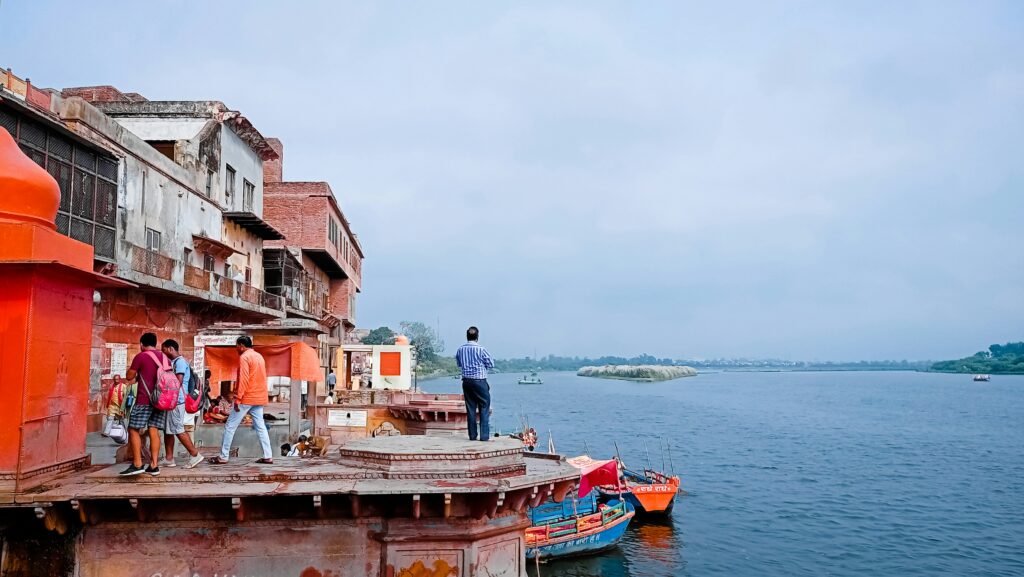
- Calm ghats on the Yamuna: Early mornings and evenings at the ghats offer peaceful views and a chance to sit quietly by the river.
The Story of Vrindavan & Lord Krishna
According to Hindu tradition, Vrindavan (along with nearby Gokul and Barsana) is where Lord Krishna spent his childhood and youth. Many of the famous stories from the Bhagavata Purana are set here:
- Makhan Chor (Butter Thief): Krishna stealing butter from the homes of gopis.
- Raas Leela: Krishna dancing with Radha and the gopis in the forests of Vrindavan under the full moon.
- Kaliya Naag: Krishna subduing the serpent Kaliya in the Yamuna.
Because of this, almost every corner of Vrindavan is associated with a particular leela (divine play). Temples and sacred spots commemorate these stories, and local guides often narrate them as you walk through the lanes.
Must‑Visit Temples in Vrindavan
1. Banke Bihari Temple
One of the most famous temples in Vrindavan, Banke Bihari Temple is dedicated to Lord Krishna in his child form as Banke Bihari (the “bent dancer”). The atmosphere inside is always energetic—devotees chant, bells ring, and darshan happens in short intervals where the curtains open and close frequently so the deity’s gaze is not continuous.
- Try to visit early morning or during the evening aarti.
- The lanes around the temple are narrow and crowded; keep your belongings close.
2. ISKCON Temple (Sri Sri Krishna Balaram Mandir)
The ISKCON temple in Vrindavan is known for its clean premises, white‑marble architecture and well‑organized kirtan. Devotees from around the world come here, giving it an international yet deeply devotional atmosphere.
3. Prem Mandir
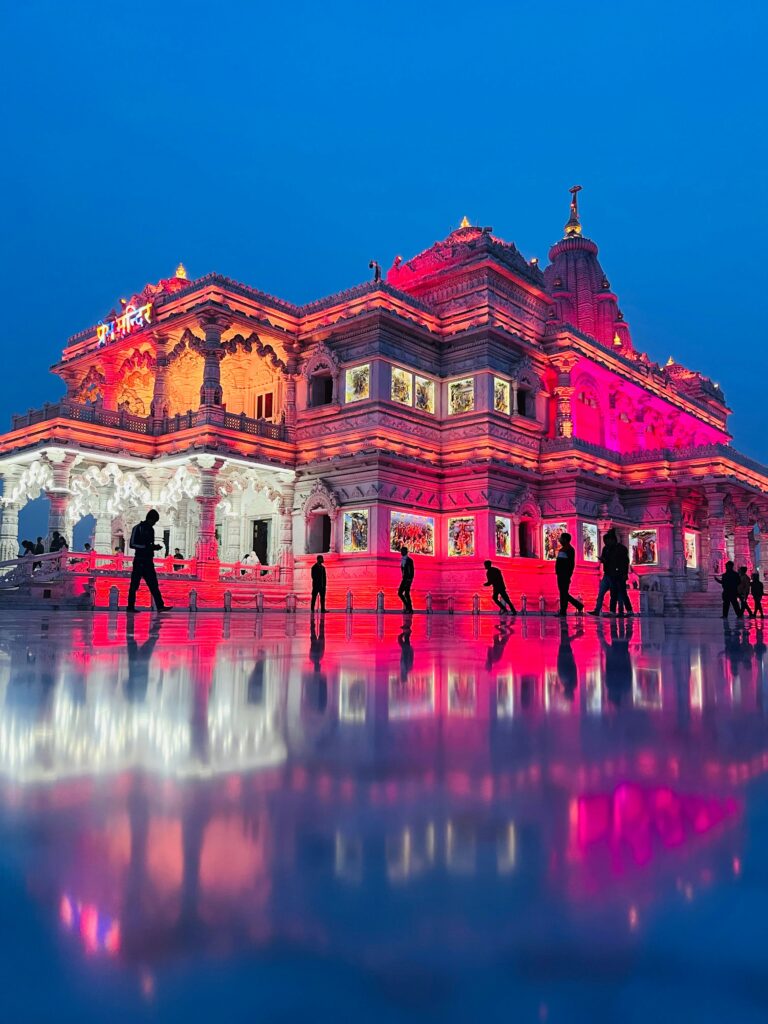
Prem Mandir is a modern temple complex built in white marble, illuminated with colourful lights at night. The temple walls and gardens are filled with sculpted scenes from Krishna and Ram’s life.
- In the evening, you can watch a light and music show depicting Krishna’s pastimes.
- The gardens and structures are ideal for photography, especially during blue hour and night.
4. Radha Raman Temple
Radha Raman is one of Vrindavan’s older and more traditional temples. The main deity is believed to have self‑manifested from a saligrama shila (sacred stone). The temple is smaller and more intimate than some of the bigger complexes but spiritually very powerful for many devotees.
5. Radha Vallabh, Nidhivan & Seva Kunj
If you have more time, add Radha Vallabh Temple, the sacred grove of Nidhivan and the garden area of Seva Kunj. Each is associated with different aspects of Radha‑Krishna pastimes and gives you a deeper feel of Vrindavan’s devotional history.
Featured Experiences in Vrindavan
- Evening aarti at Yamuna ghat: Sit by the river as priests perform aarti with lamps and chants.
- Morning parikrama: Walk the traditional parikrama route around Vrindavan, passing temples and sacred spots.
- Holi in Braj: If your dates match, experience the famous Braj Holi in Vrindavan and nearby Barsana/Mathura.
- Temple hopping with a local guide: Hire a local guide for a half‑day walk to understand the stories behind different temples.
Best Time to Visit Vrindavan
You can visit Vrindavan year‑round, but weather and festivals make a big difference.
- October to March (Best time): Pleasant days and cool nights—ideal for temple visits and walking.
- April to June: Very hot afternoons; plan early morning and late evening outings.
- July to September: Monsoon brings relief from the heat but adds humidity and occasional heavy showers.
For a first trip, October–February on a non‑festival weekend gives a comfortable experience. For maximum energy and colour (but heavy crowds), plan around Holi or Janmashtami.
How Many Days Do You Need?
- 1 day (from Delhi): Possible as a day trip, but you’ll see only a few main temples.
- 2 days / 1 night: Ideal minimum. You can explore key temples, enjoy evening aarti and spend unhurried time at the ghats.
- 3 days: Enough to include Mathura and possibly Barsana or Gokul.
How to Reach Vrindavan
By road from Delhi: Vrindavan is about 180 km from Delhi via the Yamuna Expressway. It usually takes 3.5–4.5 hours by car, depending on traffic.
By train: Take a train to Mathura Junction (MTJ). From there, Vrindavan is around 12–15 km by auto or taxi.
By bus: Buses towards Mathura/Agra stop near Vrindavan. You can then take a local auto into town.
Where to Stay in Vrindavan
- Near ISKCON / Raman Reti: Cleaner and more organized, popular with international visitors.
- Near Banke Bihari Temple: Very close to traditional temples and markets but crowded and noisy.
- Ashrams: Simple rooms for devotees; some require advance booking or referrals.
Local Tips, Safety & Etiquette
- Dress modestly, with shoulders and knees covered in temples.
- Remove footwear before entering temples; use official shoe stands or carry a small bag.
- Be careful of pickpockets in crowded lanes; keep valuables secure.
- Give donations only at official counters or donation boxes.
- Drink bottled water and eat at busy, clean‑looking places.
- Follow local instructions in sacred areas like Nidhivan and Seva Kunj.
Nearby Destinations to Combine With Vrindavan
- Mathura: Krishna’s birthplace, with the Krishna Janmabhoomi temple complex and riverfront ghats.
- Barsana: Associated with Radha and famous for Lathmar Holi.
- Agra: Home to the Taj Mahal, around 75–80 km away.
A common 3–4 day route is: Delhi → Mathura → Vrindavan → Agra → back to Delhi.
Final Thoughts
Vrindavan is one of those destinations where the experience grows the longer you stay. If you slow down, sit for aarti, walk along the ghats and listen to the stories, the town starts to feel alive with the legends of Krishna and Radha.
Whether you’re coming as a devotee or a curious traveller, a well‑planned 2–3 day trip to Vrindavan can become one of the most memorable parts of your journey through North India.